Afghan Taliban and TTP: Can Political Borders Separate a Shared Ideological and Historical Legacy?
Alleged Khost meeting, Mufti Noor Wali Mehsud’s past remarks and Taliban-mediated negotiations highlight the complex relationship between the two movements.
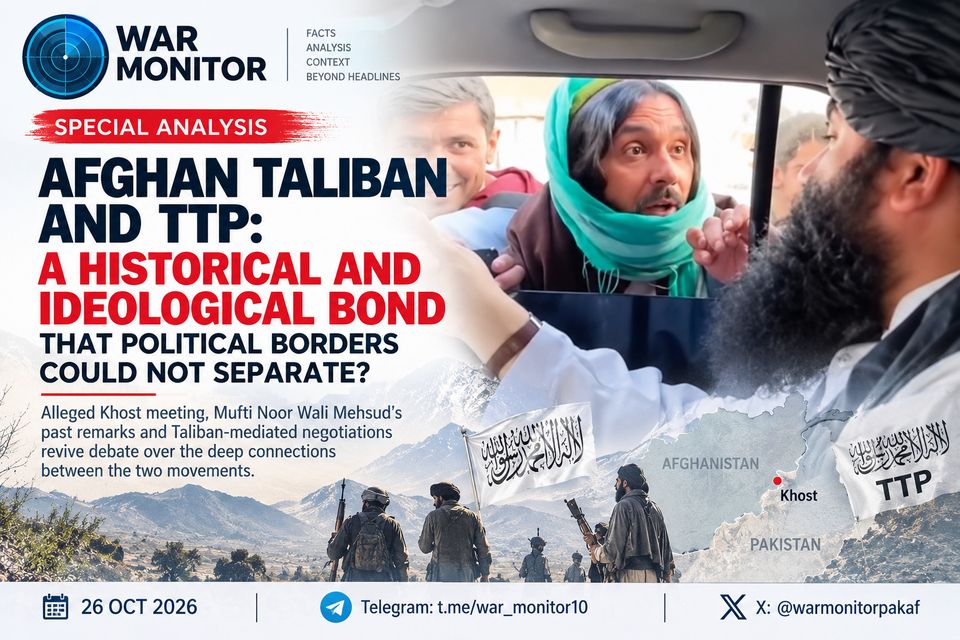
SPECIAL ANALYSIS | October 26, 2026
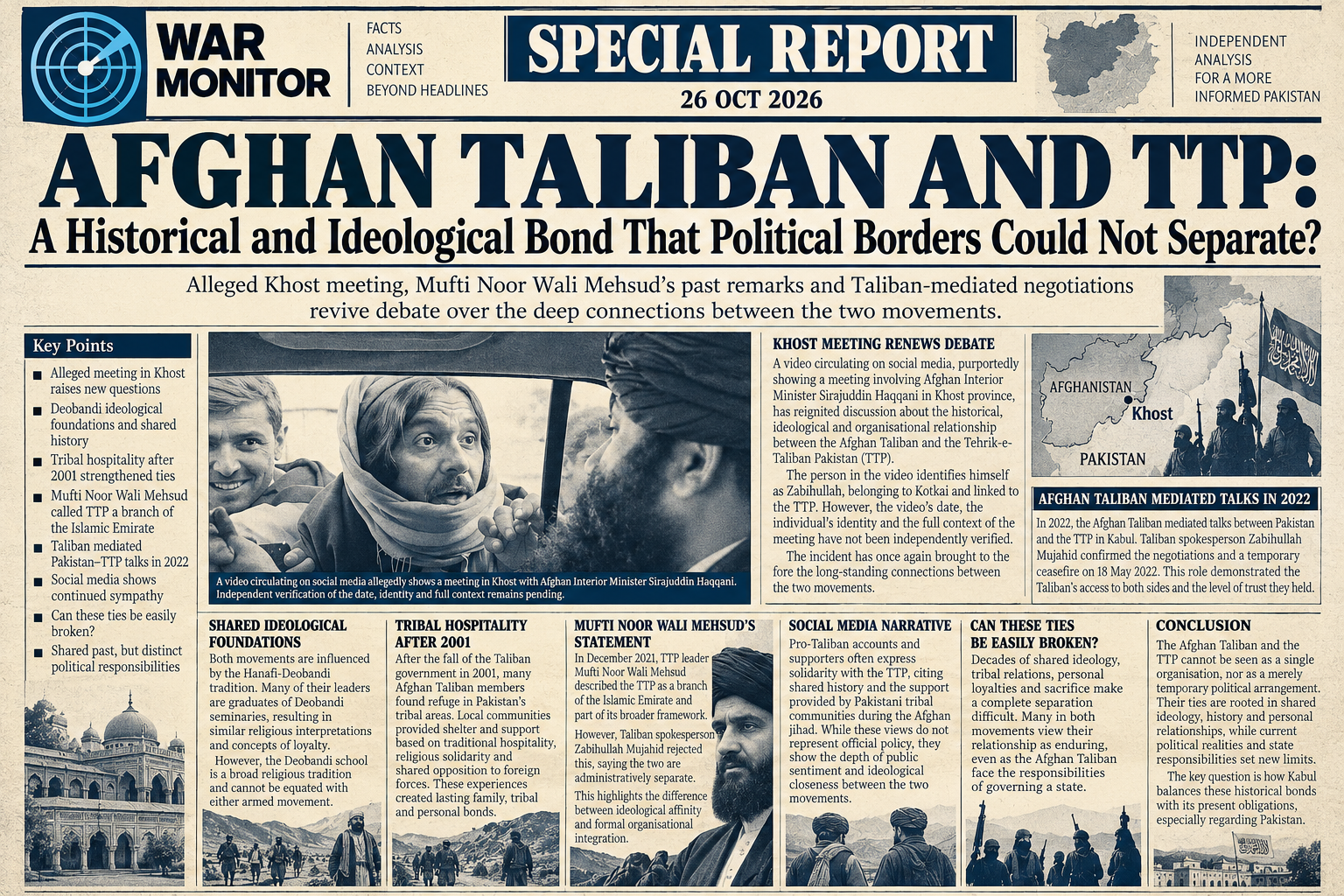
KABUL/ISLAMABAD — A video circulating on social media, purportedly showing a meeting involving Afghan Interior Minister Sirajuddin Haqqani in Afghanistan’s Khost province, has renewed debate over the historical, ideological and organisational relationship between the Afghan Taliban and the outlawed Tehrik-e-Taliban Pakistan (TTP).
In the footage, an individual identifies himself as Zabihullah, says he belongs to Kotkai and claims an affiliation with the TTP.
However, the video’s date, the individual’s identity, the circumstances of the alleged meeting and its broader context have not been independently established. Independent verification is pending.
The controversy raises a wider question: how far can political boundaries and changing state interests separate two movements whose relationships have developed through decades of religious affiliation, tribal connections, shared experiences and personal loyalties?
Shared Religious Foundations and Historical Connections
Both the Afghan Taliban and the TTP have been significantly influenced by the Hanafi-Deobandi tradition of Sunni Islam.
Senior figures associated with both movements have openly acknowledged their religious orientation, while several influential clerics and leaders have studied in institutions associated with the Deobandi school of thought.
These educational and ideological connections have contributed to similarities in religious interpretation, organisational outlook and concepts of loyalty to leadership.
Nevertheless, the Deobandi tradition must not be equated with either armed movement. It represents a broad religious and scholarly tradition whose institutions and followers hold differing positions on militancy, political authority and the use of violence.
Religious ideology is also only one element of the relationship.
Tribal affiliations, family connections, longstanding personal relationships and experiences during the Afghan conflict have played substantial roles in shaping interactions between the two movements.
After 2001: Tribal Hospitality and Shared Experiences
Following the collapse of the Taliban’s first government in Afghanistan in 2001, numerous Afghan Taliban members sought refuge in areas along the Pakistan-Afghanistan border.
Sections of the tribal population provided shelter and assistance, influenced by traditional hospitality, religious solidarity, personal connections and opposition to the United States-led military intervention.
Individuals from Pakistan’s former tribal areas also participated in the Afghan conflict, while local communities experienced displacement, casualties and extensive disruption over the following two decades.
These relationships extended beyond armed activity.
They created lasting connections between families, tribal elders, religious figures and individuals associated with different factions of the Afghan insurgency.
For many participants, the relationship developed into a matter of personal obligation, shared history and reciprocal loyalty.
This historical background helps explain why connections between certain Afghan Taliban and TTP figures cannot be understood exclusively through the political interests of their respective leaderships today.
It also helps explain why attempts to separate these networks through diplomatic pressure alone may encounter resistance at the social and individual levels.
Mufti Noor Wali Mehsud’s 2021 Statement
An important reference in discussions of the relationship emerged in December 2021, when TTP leader Mufti Noor Wali Mehsud described his organisation as a branch of the Islamic Emirate of Afghanistan and part of its broader framework.
The statement reflected how the TTP leadership publicly characterised its relationship with the Afghan Taliban following their return to power in Kabul.
It suggested that, from the TTP’s perspective, the connection extended beyond temporary political cooperation to a wider ideological and religious allegiance.
However, the Afghan Taliban’s official position was different.
Taliban spokesman Zabihullah Mujahid rejected the suggestion that the TTP was formally part of the Islamic Emirate’s organisational structure, maintaining that the two were administratively separate.
This distinction is essential.
Ideological affinity, personal loyalty and formal organisational subordination are not interchangeable concepts.
A movement may express allegiance to another leadership without necessarily being incorporated into its command structure or having all its activities officially authorised.
The contrasting statements therefore demonstrate both the depth of the relationship claimed by the TTP and the institutional boundaries asserted by Afghanistan’s Taliban authorities.
Afghan Taliban Mediation Between Pakistan and the TTP
Another significant and documented aspect of the relationship is the Afghan Taliban’s role in negotiations between Pakistan and the TTP.
In 2022, representatives of Pakistan and the TTP held talks in Kabul with the involvement of the Taliban administration.
On May 18, 2022, Zabihullah Mujahid publicly confirmed the negotiations and an associated temporary ceasefire.
The Taliban administration’s mediation demonstrated that its leadership maintained channels of communication with both parties and possessed sufficient access to facilitate direct engagement.
This was a practical indication of the relationships and influence available to the Afghan Taliban.
Nevertheless, mediation does not automatically establish support for the military activities or political demands of either negotiating party.
Governments and other intermediaries can facilitate talks between adversaries without endorsing their objectives.
Even with that distinction, an important analytical question remains: would the Taliban leadership have been able to play such a role without established channels of communication, historical familiarity and a degree of confidence among the parties?
The negotiations suggest that these connections remained relevant after the Afghan Taliban assumed governing responsibilities in August 2021.
Attitudes Among Taliban Sympathisers on Social Media
Another dimension of the relationship can be observed in social media discussions involving individuals and accounts sympathetic to the Afghan Taliban.
Some express religious solidarity with the TTP, refer to shared historical experiences and emphasise assistance provided by Pakistani tribal communities during the Afghan conflict.
A recurring argument among certain supporters is that individuals from Pakistan’s tribal areas contributed personnel, resources and shelter to the Afghan Taliban during their insurgency.
Some commentators go further, arguing that these historical contributions create a continuing religious or moral obligation to support the TTP.
Such statements represent the views of their authors and should not be interpreted as established religious obligations or official Afghan government policy.
Their prevalence and representativeness have not been independently quantified.
Nevertheless, these expressions provide material for examining how some supporters understand the relationship through the concepts of reciprocity, religious solidarity and historical loyalty.
They also indicate why changes in formal government policy may not immediately transform attitudes among individuals who view the two movements as part of a common ideological tradition.
Ideological Affinity Versus State Responsibilities
The Afghan Taliban’s return to power in August 2021 fundamentally altered their political position.
As an insurgent movement, their priorities centred on their armed struggle against the former Afghan government and international forces.
As Afghanistan’s governing authority, they face a different set of responsibilities, including border management, diplomacy, domestic security, economic pressures and relations with neighbouring countries.
The TTP, meanwhile, continues to conduct armed operations against the Pakistani state.
This difference creates a significant tension between historical relationships and contemporary political interests.
Pakistan has repeatedly accused the Afghan Taliban administration of allowing the TTP to operate from Afghan territory and of failing to prevent cross-border attacks.
Afghanistan’s Taliban authorities have rejected accusations that they officially support or facilitate such operations.
These competing positions must be distinguished from independently established facts.
The presence of historical, ideological or personal connections does not, by itself, establish that the Afghan government directs or approves specific TTP attacks.
Equally, formal denials of organisational integration do not necessarily mean that all informal relationships between members and sympathisers have disappeared.
A credible assessment must therefore examine historical affiliations, informal networks, official policy and state conduct as separate, although potentially interconnected, issues.
Can These Relationships Be Easily Broken?
The history of the Afghan Taliban and the TTP suggests that their relationships cannot be reduced to a single political agreement or diplomatic decision.
Connections shaped by religious education, tribal hospitality, family ties, personal loyalties and more than two decades of conflict may survive changes in government policy.
For some individuals associated with the Afghan Taliban, assistance received from Pakistani tribal communities during earlier phases of the Afghan war remains a significant part of their personal and collective historical memory.
The author assesses that this sense of obligation is an important reason why sections of the two movements may continue to view their relationship as enduring.
According to this interpretation, the sacrifices made by tribal communities during the Afghan conflict are not regarded simply as historical events but as experiences carrying lasting social and moral significance.
Some supporters express this sentiment through religious and historical comparisons that place exceptional importance on hospitality, sacrifice and loyalty.
Such comparisons reflect the beliefs and interpretations of those making them; they are not independently measurable historical judgments.
The Afghan Taliban’s surviving senior figures include individuals who experienced refuge and assistance in tribal areas during the insurgency.
For these figures, personal memories and longstanding relationships may continue to influence attitudes even where official policy requires a different approach.
This helps explain why some observers regard a complete separation of the movements’ social and ideological networks as highly difficult.
However, it would be too categorical to conclude that separation is impossible.
Historical loyalty does not eliminate disagreements over strategy, territorial authority, diplomatic priorities or the responsibilities of government.
The Afghan Taliban may maintain personal or ideological relationships with TTP figures while adopting policies that differ from the TTP’s objectives.
The critical question is therefore not whether all historical ties can disappear, but how those ties influence present-day decisions and whether Afghanistan’s governing authorities can enforce a distinction between informal affiliations and official conduct.
The Central Challenge Facing Kabul
The TTP has long presented its relationship with the Afghan Taliban in terms of religious allegiance and support for the Islamic Emirate.
Its leadership has argued that its earlier armed activities were connected to the defence of the Afghan Taliban and has continued to express a commitment to that cause.
These are the TTP’s own characterisations of its objectives, not independent assessments of the legitimacy of its activities.
The Afghan Taliban, meanwhile, must balance the expectations of individuals and networks shaped by the Afghan insurgency against the practical demands of governing Afghanistan.
This challenge has become particularly sensitive as tensions with Pakistan have increased over cross-border security and militant activity.
Diplomatic pressure may influence official policies, but it cannot necessarily erase personal relationships, historical memories or ideological sympathies.
At the same time, those relationships do not remove the Afghan authorities’ responsibility to address security concerns involving neighbouring countries.
The extent to which Kabul can distinguish between historical solidarity and contemporary state obligations will remain central to the future of Pakistan-Afghanistan relations.
Conclusion: A Shared Past, but Distinct Political Responsibilities
The Afghan Taliban and the TTP cannot accurately be described as a single, formally unified organisation on the basis of their shared history alone.
Nor can their relationship be adequately explained as a temporary political arrangement without deeper roots.
Their connections developed through religious education, ideological affinity, tribal networks, family relationships, shared experiences and personal loyalties.
These factors help explain why the relationship has endured despite changing political circumstances.
The alleged Khost meeting, Mufti Noor Wali Mehsud’s 2021 statement and the Afghan Taliban’s mediation in 2022 illustrate different dimensions of this complex relationship. They do not, individually or collectively, establish a single formal command structure.
The central issue now concerns the choices facing Afghanistan’s Taliban administration.
As Pakistan continues to raise concerns about the TTP, Kabul must determine how to manage its historical affiliations while fulfilling its present responsibilities as Afghanistan’s governing authority.
The strongest conclusion supported by the historical record is that political borders and government decisions may reshape these relationships, but they are unlikely to erase their social and ideological foundations quickly.
Whether those foundations continue to influence official policy, or become increasingly separated from it, remains an important question for the future of the region
Telegram: https://t.me/war_monitor10
X: https://x.com/warmonitorpakaf
Sources & verification
Reported by media or local sources. How we label claims
Read next
Related coverage
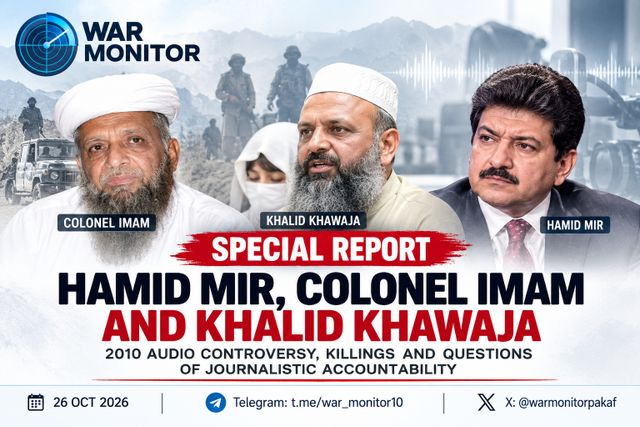
Hamid Mir’s Remarks on Colonel Imam Revive Questions Over Controversial 2010 Audio Recording

WAR MONITOR | Follow Our Backup X Account
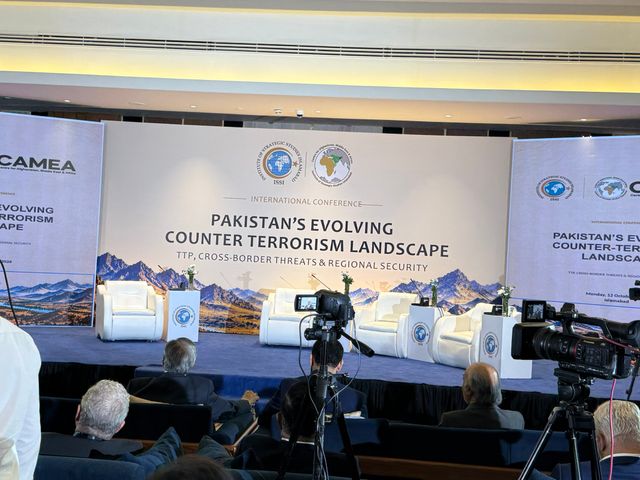
Islamabad Conference Examines TTP Threat and Pakistan’s Evolving Counterterrorism Challenges
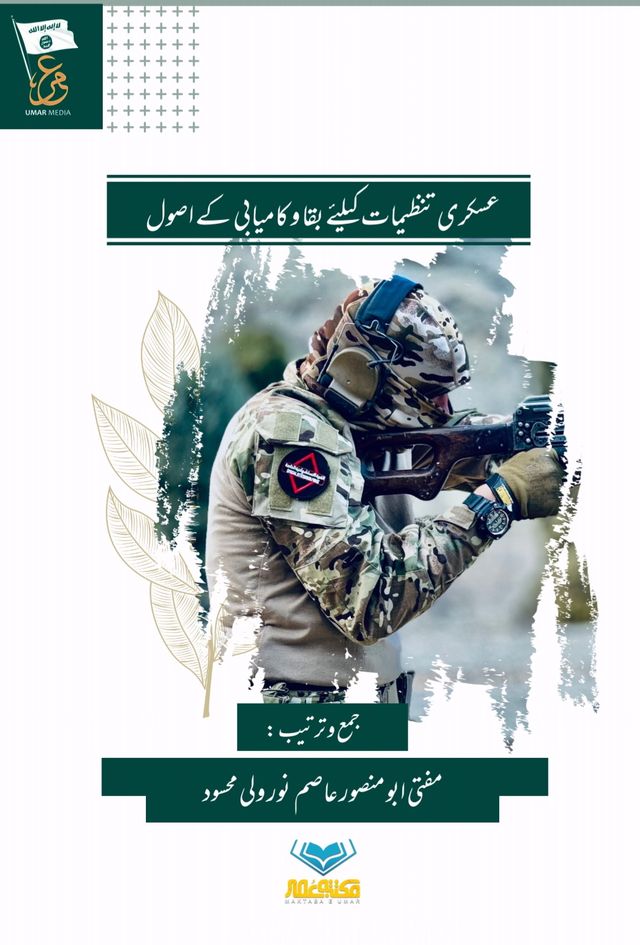
TTP Releases New Book Attributed to Chief Mufti Noor Wali Mehsud
Region