TTP Claims 1,055 Attacks in Q3 2026 as PICSS Assessment Highlights Expansion, Leadership Changes and Militant Rivalries
- Published
- Updated
- Reading time
- 8 min read
PDF👇👇👇👇 Englisg
TTP_Q3_2026_Original_English_Report
PDF URDU 👇👇👇👇
**October 10, 2026 | Attaullah Hafeez — WAR MONITOR Islamabad Desk**
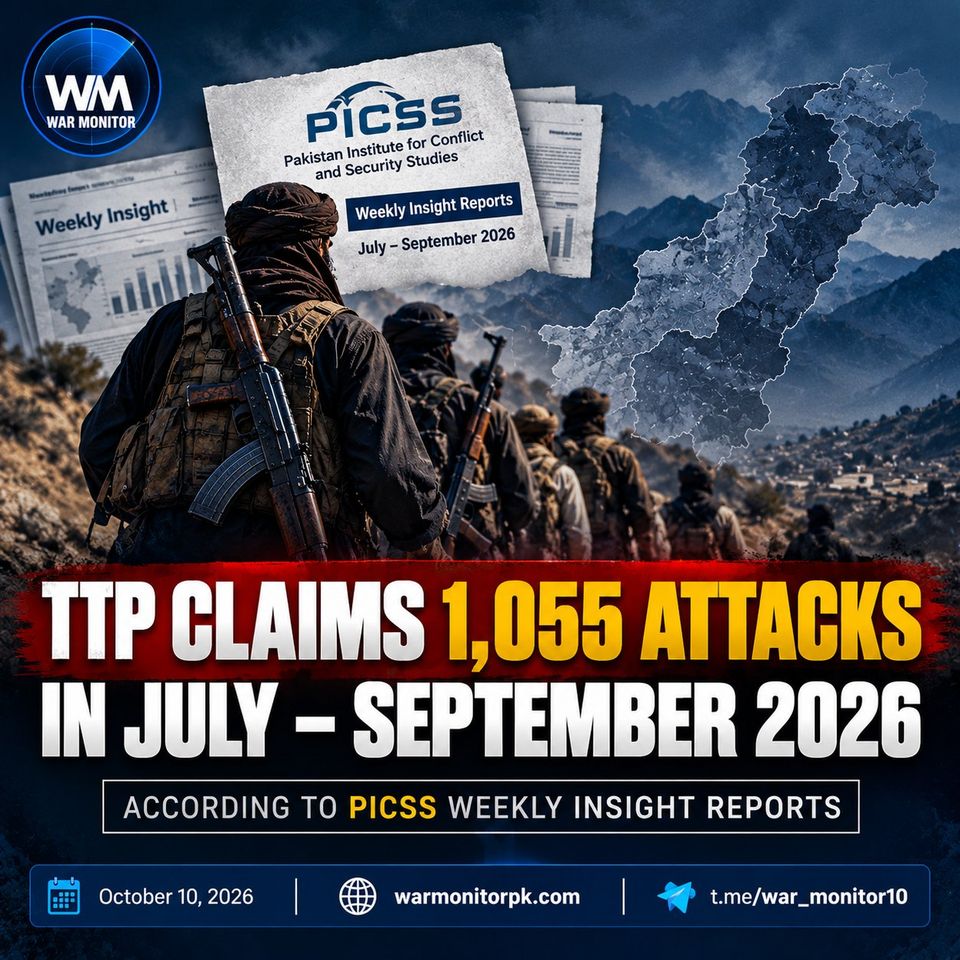
The outlawed Tehrik-e-Taliban Pakistan (TTP) claimed responsibility for 1,055 attacks across Pakistan between July and September 2026, as the group sought to consolidate its leadership, absorb smaller militant factions and expand its influence beyond its traditional strongholds, according to an assessment based on Pakistan Institute for Conflict and Security Studies (PICSS) Weekly Insight reports.
The assessment highlights the roles of TTP chief Mufti Noor Wali Mehsud, former media head Chaudhry Muneeb-ur-Rehman Jutt and several regional commanders in the organisation’s changing structure. It also examines competition involving Jamaat-ul-Ahrar (JuA), Ittehad-ul-Mujahideen Pakistan (IMP) and the Hafiz Gul Bahadur group.
TTP Claims More Than 1,000 Attacks
According to its monthly statements, the TTP claimed 315 attacks in July, 406 in August and 334 in September, bringing the quarterly total to 1,055.
The group also claimed that its attacks killed 811 people and injured 1,211 others during the three-month period, while 144 people were captured.
These figures represent the TTP’s own claims and should not be confused with independently documented incidents or verified casualty statistics.
**Independent verification is pending.**
Mufti Noor Wali Mehsud and Organisational Consolidation
The assessment identifies Mufti Noor Wali Mehsud as the central figure in the TTP’s continuing efforts to bring smaller militant factions under a unified command.
On July 8, the organisation announced that factions led by Hafiz Saifullah Baloch from Chagai district in Balochistan and Mufti Abbas, also known as Ansari, from Buner district in Khyber Pakhtunkhwa had pledged allegiance to Mehsud.
Further incorporations were announced on September 16, involving factions from Mohmand, Bajaur and the Quetta-Harnai region.
Among the individuals identified in the announcement were Mufti Muawiya, Maulvi Khalid, Qari Yasin, Shaukat and Maulvi Waliullah.
These developments suggested that the TTP was seeking to extend its recruitment and organisational networks beyond the former tribal districts, particularly into settled areas of Khyber Pakhtunkhwa and parts of Balochistan.
On August 4, Umar Media released a 23-minute video featuring Noor Wali Mehsud. The production appeared intended to demonstrate his continued leadership and authority within the organisation. However, the locations shown in the footage could not be independently verified.
Chaudhry Muneeb-ur-Rehman Jutt and the Punjab Network
One of the most notable developments concerned Chaudhry Muneeb-ur-Rehman Jutt, also identified as Chaudhry Munib Ahmad Jutt, a Punjabi militant figure previously associated with al-Qaeda in the Indian Subcontinent (AQIS).
Jutt had served for an extended period as head of the TTP’s Umar Media, overseeing a period of expanded multilingual propaganda production.
During the quarter, he was replaced as media chief, with Engineer Abdullah appointed to the position on July 5.
Around September 22, a video featuring Jutt and armed individuals circulated through TTP-linked media. In the recording, he addressed residents of southern Punjab, claimed that the organisation was active in the province and appealed for local support.
The development suggested a shift in Jutt’s public role from central media management towards regional operational messaging.
His appearance was particularly significant because the TTP has historically been associated primarily with Pashtun militant networks. The use of a Punjabi figure in its southern Punjab messaging reflected an attempt to broaden the organisation’s geographical and recruitment profile.
However, the precise location of the recording and the scale of any TTP network operating in southern Punjab remain unverified.
Engineer Abdullah and the Media Leadership Transition
Engineer Abdullah’s appointment as TTP media chief marked another important organisational development.
The leadership change was accompanied by announced adjustments to the group’s website, video-production and social-media operations.
The assessment indicates that Umar Media continued producing increasingly sophisticated material, including multilingual videos, documentaries, interviews and content incorporating emerging digital technologies.
The group’s media output sought to reinforce internal discipline, support recruitment and portray the organisation as capable of operating across multiple regions.
PICSS also documented the use of propaganda narratives directed at religious audiences and communities affected by insecurity.
Leadership Changes in Orakzai
The quarter also saw changes in the TTP’s regional command structure.
On August 5, the organisation confirmed the death of its Orakzai wali, Amir al-Bahr Muawiya, also known as Ahmadur Rahman, who was reportedly killed during a security operation in Hangu.
Following his death, the TTP announced Muhammad as the new regional leader and Abubakr as his deputy.
The appointments reflected the organisation’s efforts to maintain command continuity despite leadership losses.
Peer Ain-ul-Zaman and Local Influence
The assessment also identifies senior TTP Rahbari Shura member Peer Ain-ul-Zaman as an important figure in the group’s outreach concerning Balochistan and adjoining Pashtun areas.
His messaging reportedly focused on grievances associated with security operations and criticism of government-backed peace committees.
Other TTP-linked commanders issued warnings against cooperation with such committees.
In Tank, a commander publicly criticised police, tribal elders and residents cooperating with government institutions.
In Bannu, a commander identified as Aryana Paindakhel reportedly threatened residents of certain houses in Domel, demanding that they vacate their properties by August 25.
The authenticity and circumstances of the reported threat could not be independently established.
These developments illustrated the group’s attempts to exercise influence over local communities through political messaging and intimidation.
Mufti Ghufran and Internal Organisational Discipline
Mufti Ghufran, a member of the TTP Rahbari Shura and head of its media commission, also emerged in the assessment as an important figure in efforts to preserve organisational unity.
During August, he delivered a leadership message emphasising obedience to commanders, internal discipline and the avoidance of disagreements.
The message came amid growing competition from other militant organisations, particularly Jamaat-ul-Ahrar and Ittehad-ul-Mujahideen Pakistan.
Both formations represented potential alternatives for militants seeking organisational affiliation, local influence and resources.
The emphasis on unity suggested that the TTP leadership recognised the risks posed by fragmentation and competing armed networks.
Hafiz Gul Bahadur Group and Rivalry in South Waziristan
The assessment also examines reported tensions between TTP-linked factions and the Hafiz Gul Bahadur group.
On September 13–14, clashes were reported in Kariz Kot, Lower South Waziristan, involving a faction identified as the Rahmatullah Group and members of the Hafiz Gul Bahadur group.
The fighting reportedly resulted in casualties on both sides, including the death of a senior Hafiz Gul Bahadur group figure identified as Sohail Mughal Khel.
Reports linked the confrontation to disputes involving revenues from the chilgoza trade and alleged extortion associated with development projects.
The incident highlighted how financial interests and territorial influence can produce conflict between militant factions despite ideological similarities.
The reported casualties and underlying causes of the confrontation remain subject to independent verification.
Expansion Towards Balochistan, Punjab and Sindh
Beyond its traditional centres in North and South Waziristan, the TTP increasingly publicised claimed activity in Peshawar, Dera Ismail Khan, Tank, Hangu, Kurram, Bajaur and Lower Dir.
In Balochistan, its releases highlighted claimed activity in Ziarat, Pishin and Panjgur.
The Panjgur claim was particularly notable because it suggested an effort to project the organisation’s presence into Baloch-majority areas beyond the province’s predominantly Pashtun belt.
The September video featuring Muneeb-ur-Rehman Jutt similarly sought to demonstrate influence in southern Punjab.
A separate production featuring a Sindhi-language message appeared intended to attract support in Sindh.
However, propaganda releases alone do not establish a permanent organisational presence or the operational strength of militant networks in these areas.
Drone Technology and Operational Adaptation
The assessment identifies an increasing emphasis on drones, surveillance equipment and other technologies in TTP media productions.
Videos circulated during the quarter showed quadcopters and other equipment reportedly associated with militant operations.
TTP spokesperson Muhammad Khurasani also claimed that the group was pursuing longer-range missile capabilities and expanding its use of thermal imaging technology.
However, the assessment cautioned that such statements did not establish that the organisation possessed an operational missile capability.
The group’s media productions also continued to feature suicide attacks and individuals identified as suicide attackers, reflecting the continued use of such operations in its campaign.
Possible Tensions With the Afghan Taliban
The assessment also discusses unconfirmed reports of disagreements between TTP leaders and Afghanistan’s Taliban authorities.
During late August, social-media accounts claimed that Noor Wali Mehsud had relocated to Pakistan following differences with the Afghan Taliban leadership.
Other accounts alleged restrictions or detentions involving senior TTP figures in Afghanistan.
Neither the TTP nor the Afghan Taliban officially confirmed these reports.
Consequently, the claims do not establish a definitive change in relations between the two organisations.
Assessment
The developments documented during the third quarter of 2026 indicate that the TTP continued pursuing a broader organisational and geographical strategy under Mufti Noor Wali Mehsud.
The incorporation of smaller factions, the changing role of Muneeb-ur-Rehman Jutt, Engineer Abdullah’s appointment as media chief and the activities of regional commanders reflected attempts to strengthen the group’s organisational structure and expand its public reach.
At the same time, competition from Jamaat-ul-Ahrar, IMP and the Hafiz Gul Bahadur group, together with security operations and leadership losses, presented challenges to its consolidation efforts.
The assessment suggests that the TTP sought to project itself as a nationwide militant organisation rather than one confined to the former tribal districts. Nevertheless, its actual operational reach, claimed attack totals and casualty figures require independent corroboration.
**Source:** PICSS Weekly Insight reports covering July–September 2026, including material published through October 1 concerning September developments.
**Editorial note:** This report is a WAR MONITOR news analysis based on the supplied PICSS assessment. Statements attributed to militant organisations, including attack statistics and claims of territorial presence, have not been independently verified.
X: https://x.com/warmonitorpakaf
Telegram: https://t.me/war_monitor10
Sources & verification
A party to the conflict claims this. Not independently confirmed. How we label claims
Read next
Related coverage
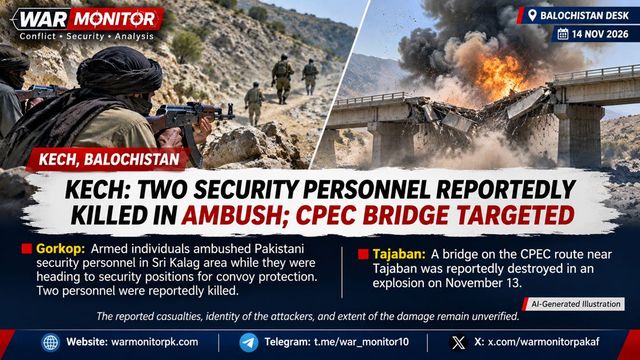
Two Pakistani Security Personnel Reportedly Killed in Kech Ambush; CPEC Route Bridge Destroyed
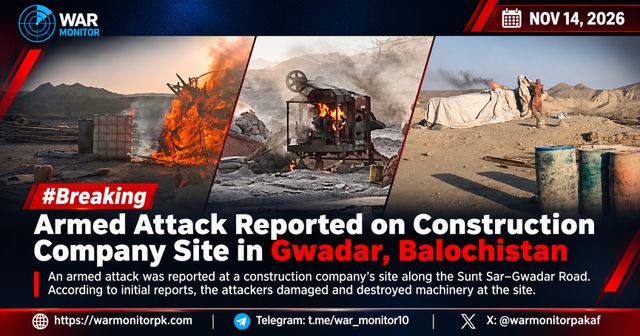
Armed Attack Reported on Construction Company Site in Gwadar, Balochistan
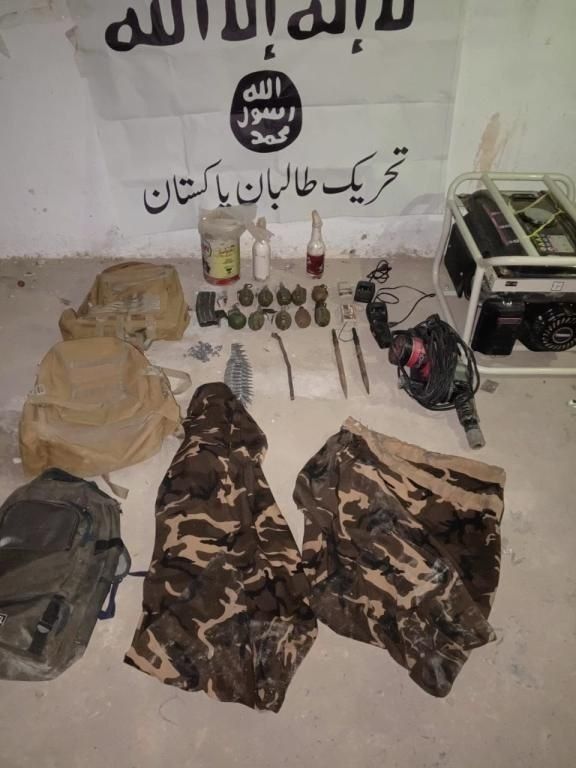
Pakistan Military Claims 74 Militants Killed in Operations Across Khyber Pakhtunkhwa and Balochistan
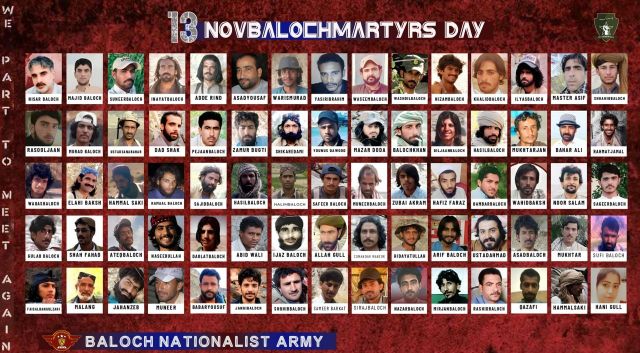
Baloch Nationalist Army Issues Statement Marking Baloch Martyrs’ Day on November 13
Region