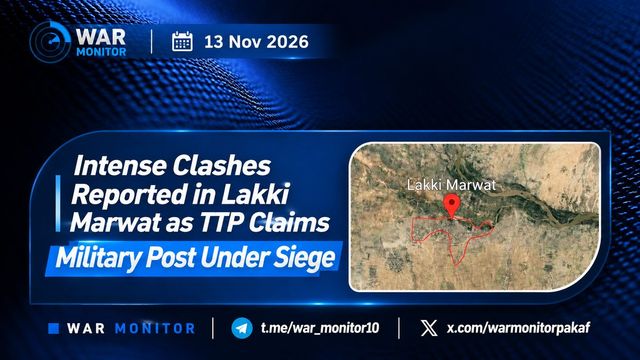
London Teenager Jailed for Providing Cybersecurity and Cryptocurrency Advice to Al-Qaeda and TTP
London, United Kingdom — October 23, 2026
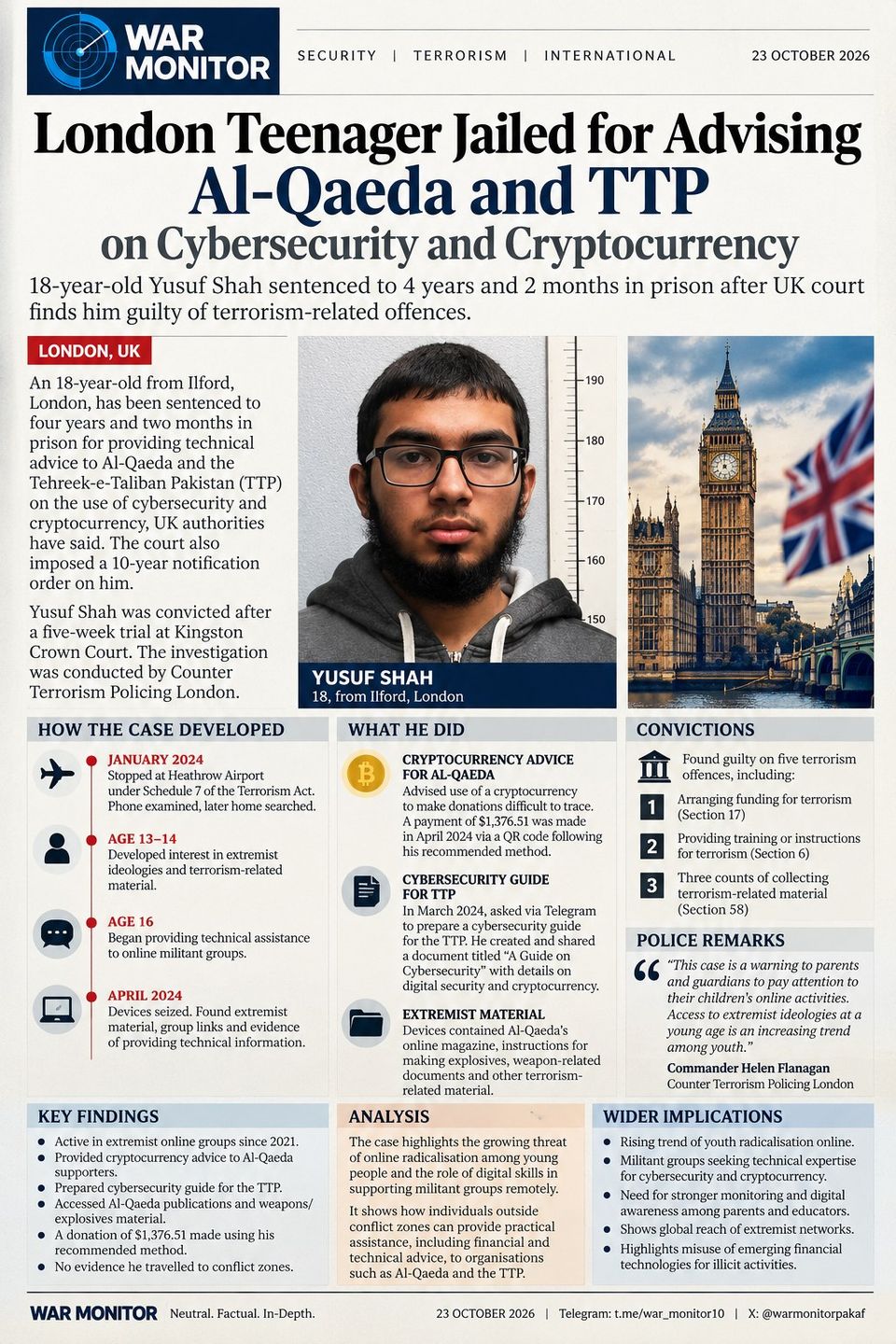
An 18-year-old London resident has been sentenced to four years and two months in prison after being convicted of terrorism-related offences involving cryptocurrency funding arrangements, cybersecurity assistance to the Tehreek-e-Taliban Pakistan (TTP), and possession of extremist material.
Yusuf Shah, from Ilford in east London, was sentenced at Kingston Crown Court on October 20 following an investigation by Counter Terrorism Policing London. The court also imposed a 10-year terrorism notification order.
According to the Metropolitan Police, Shah had provided technical advice to individuals supporting Al-Qaeda and the banned TTP while he was still 16 years old.
Investigation Began After Heathrow Airport Examination
The investigation began in January 2024 when Shah, then aged 16, was stopped at Heathrow Airport under Schedule 7 of the Terrorism Act 2000.
Counterterrorism officers examined his mobile phone and subsequently searched his home in April 2024, seizing a computer and USB storage devices for forensic analysis.
Investigators established that Shah had been active in online discussions since 2021, when he was approximately 13 years old. By late 2022, he had begun expressing support for Al-Qaeda and TTP-related activities.
Police said his online involvement subsequently developed into practical technical assistance for individuals associated with militant organisations.
Cryptocurrency Advice Linked to Al-Qaeda Donations
According to the police investigation, Shah participated in Telegram groups where supporters of extremist organisations discussed their activities.
Investigators found that he had advised participants on cryptocurrency payment arrangements intended to make donations to Al-Qaeda more difficult to trace.
Police reported that a payment of $1,376.51 was made in April 2024 through a donation mechanism associated with his advice.
The Metropolitan Police said this was the only donation recorded through that particular payment arrangement.
The case illustrates how online extremist networks may seek technical assistance from individuals with digital knowledge, even when those individuals are geographically distant from the organisations they support.
Cybersecurity Document Prepared for TTP
A separate part of the investigation concerned Shah’s communication with an individual who requested cybersecurity assistance for the Tehreek-e-Taliban Pakistan.
According to investigators, Shah was approached through Telegram in late March 2024. The individual told him that a senior TTP official had requested a cybersecurity guide.
Shah subsequently prepared a document titled A Guide on Cybersecurity and sent it to the individual.
Police said the document contained advice on digital security and cryptocurrency intended to help the organisation conceal aspects of its online activities.
The investigation established that Shah provided the document in response to the request. However, the available police statement does not independently establish the identity of the alleged senior TTP official or how extensively the material was subsequently used.
Extremist Material Recovered from Electronic Devices
Investigators also reported finding terrorism-related publications and documents on Shah’s electronic devices.
These included an Al-Qaeda online magazine, material concerning explosives and weapons, and other information authorities considered potentially useful for preparing terrorist acts.
Police said Shah had participated in international Telegram groups expressing support for militant organisations and had offered his computer-related knowledge to their participants.
The prosecution relied on evidence of both his online communications and the materials recovered from his devices.
Five Terrorism Offences Established at Trial
Following a five-week trial at Kingston Crown Court, Shah was convicted of five offences under the Terrorism Act 2000.
These comprised:
1. One count involving arrangements through which money or property could be made available for terrorism, contrary to Section 17.
2. One count of providing instruction or training intended to assist terrorism-related activities, contrary to Section 6.
3. Three counts of collecting information likely to be useful to a person committing or preparing an act of terrorism, contrary to Section 58.
The sentencing took place on October 20, 2026, with the Metropolitan Police publicly confirming the outcome the following day.
Shah received a custodial sentence of four years and two months, alongside a 10-year notification order.
Police Warn About Online Radicalisation Among Young People
Commander Helen Flanagan, head of Counter Terrorism Policing London, said the investigation demonstrated how young people can become involved with extremist material through online platforms.
She highlighted that Shah had begun engaging with extremist content at approximately 13 or 14 years of age and had developed sufficient technical knowledge to assist militant-linked networks while still a teenager.
Flanagan urged parents and guardians to take an active interest in their children’s online activities and to seek professional guidance where concerns about radicalisation arise.
Wider Security Significance
The case highlights a dimension of contemporary counterterrorism investigations that extends beyond physical participation in armed groups.
According to the evidence presented in court, Shah’s involvement centred on online communications, financial arrangements and technical assistance rather than direct participation in attacks.
It also demonstrates the potential for individuals outside conflict zones to provide remote support to organisations operating in other countries.
For security authorities, the case raises broader questions about online recruitment, youth radicalisation and the misuse of digital financial systems.
The conviction and sentence are confirmed through official police reporting and court records. Claims about the involvement of particular militant officials are attributed to the evidence described by investigators rather than treated as independently established organisational admissions.
Telegram: https://t.me/war_monitor10
X: https://x.com/warmonitorpakaf
Sources & verification
Reported by media or local sources. How we label claims
Read next
Related coverage

Body of Alleged Abduction Victim Recovered in Bannu After Ten Days

Armed Attack Reported on Construction Company Site in Gwadar, Balochistan
Pakistan Military Claims 74 Militants Killed in Operations Across Khyber Pakhtunkhwa and Balochistan